Varicocele embolisation
Safe and effective minimally invasive technique to treat varicocele. Performed under precise radiological guidance, this method offers an effective alternative to surgery with rapid recovery.
Why varicocele embolisation?
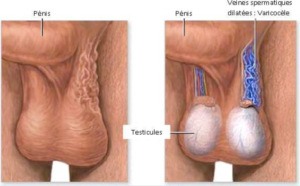
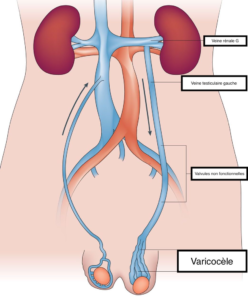
A varicocele is a dilatation of the peri-testicular veins. It is often located on the left side due to incompetence of the left spermatic vein.
It is often asymptomatic but may also cause pain or a feeling of heaviness in the testicle, particularly at the end of the day or after physical exercise.
Varicocele is mainly diagnosed in men of reproductive age, as it may affect male fertility. Patients may present with scrotal pain or a palpable mass in the region.
How does varicocele embolisation proceed?
The procedure is performed on a day-case basis. The stay generally lasts less than half a day.

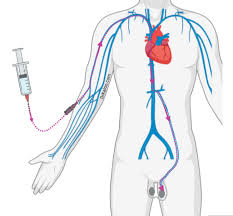
Varicocele embolisation is performed in the interventional radiology suite. The patient lies on the examination table, and local anaesthesia is administered either in the arm or the thigh to minimise discomfort. A small catheter is inserted into a vein in the right groin or right arm under radiological guidance. The catheter is positioned using X-rays into the testicular vein (usually on the left if pain is on the left side) and occlusion is performed using glue (Glubran 2, for example) or coils. The dilated vein is now occluded and blood will return via non-pathological pathways with redirection of blood flow. The procedure generally takes less than one hour.
The patient is discharged from the day unit approximately 2 hours after completion of the procedure.


What are the potential complications?
Varicocele embolisation is considered a safe procedure, but like any medical intervention, it carries potential risks. Rare complications include allergic reaction to embolisation agents, infection at the catheter insertion site, or blood clot formation. It is essential to discuss the risks with your radiologist before deciding on embolisation.
What are the benefits of varicocele embolisation?
Pain reduction
Most patients experience significant improvement in scrotal pain after the procedure.
Improved fertility
Embolisation may help improve fertility by normalising blood flow to the testicles.
Rapid recovery
Patients can generally return to normal activities within a few days, compared to the prolonged recovery after surgical intervention.
Results and recovery
After embolisation, patients may experience mild pain or discomfort for a few days, which can be managed with analgesics. It is recommended to avoid strenuous physical activity during the first week. Results, such as pain reduction and improved sperm quality, may be observed after a few months.
What do you need before a consultation with the radiologist?
A testicular ultrasound, which may be performed during the consultation if necessary.
Ready to book an appointment?
Contact us to discuss your situation and schedule your consultation
Book an appointment