Uterine Fibroid Embolisation
A surgical alternative developed by radiologists to treat uterine fibroids. A safe and effective minimally invasive technique performed under precise radiological guidance.
Uterine Fibroids: What Are They?
Uterine fibroids, also called myomas, are benign tumours of the uterine muscle (the myometrium). These lesions develop in women of childbearing age, generally from 35 years until menopause.
Depending on their location, particularly near the myometrium, they can cause very heavy genital bleeding during or around menstruation. Some patients develop anaemia requiring iron supplementation.
Periods may also be painful (dysmenorrhoea).
Some fibroids cause mass effects on adjacent digestive structures or the bladder.
Why Uterine Artery Embolisation?
Uterine artery embolisation is a surgical alternative developed by radiologists in the late 1990s.
Numerous publications have demonstrated the efficacy of this treatment, particularly its long-term effectiveness.
Its advantages include a shorter hospital stay and a lower complication rate compared to surgery.
How Is Uterine Artery Embolisation Performed?
Prior to the procedure, the radiologist sees the patient in consultation to assess symptoms and inform her about available therapeutic options. During this consultation, they explain the principles, benefits and risks of embolisation.
The procedure is performed during hospitalisation or on an outpatient basis depending on the centre.
A consultation with an anaesthetist is essential as the procedure is performed under sedation or general anaesthesia.

- The radiologist establishes arterial access via the right common femoral artery, generally 5 French in diameter (more rarely via the radial route).
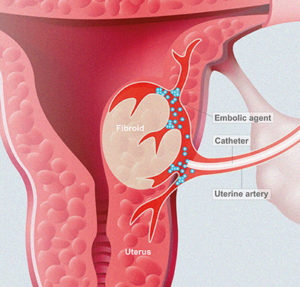
- Under X-ray guidance, a catheter is inserted to reach the pelvic arteries.
- A microcatheter (2.7 French, 0.9 mm diameter) is inserted into this catheter and, still under X-ray guidance, advanced to the right and left uterine arteries.
- After confirming the absence of anatomical variants, treatment is performed by injecting microparticles of 500–700 microns until complete cessation of blood flow.
- Compression is then applied at the puncture site, sometimes using an internal closure device.
What Happens After Uterine Artery Embolisation?
After embolisation, the patient returns to the recovery room, then to her room with an analgesic protocol.
Pain may occur from the first night. These pelvic pains can sometimes last several days.
The Centre Aquitain d'Imagerie team works closely with the MidiPerf team for home care follow-up, supported by a network of community nurses.
What Are the Risks of Uterine Artery Embolisation?
Uterine artery embolisation is generally considered a safe and effective procedure for treating pain and excessive bleeding related to uterine fibroids. However, as with any medical intervention, certain risks are associated with uterine artery embolisation, such as:
- Anaesthesia-related complications
- Temporary pain and cramps in the lower abdomen
- Fever, nausea and vomiting
- Infection of the uterus or fallopian tubes
- Damage to uterine arteries or other organs
- Risk of uterine mucosal infarction, leading to necrosis and possible hysterectomy
- Risk of early menopause in women who undergo embolisation before menopause.
These risks are rare, but it is important that patients understand the potential risks and benefits of the procedure before making an informed decision. It is recommended to discuss with your physician for detailed information on uterine artery embolisation and to determine whether this procedure is suitable for your specific situation.
How Much Does Uterine Artery Embolisation Cost?
The procedure is reimbursed by the French social security system with no fee over and above standard reimbursement at Bordeaux University Hospital (CCAM procedure EDSF004). There is no additional cost if you have supplementary health insurance.
Ready to book an appointment?
Contact us to discuss your situation and schedule your consultation
Book an appointment